Showing posts with label global warming. Show all posts

Sunday, November 29, 2009

"Climate Wars" and Ethnic Violence -- Kenya

The collective violence that occurred in the western Sudanese region of Darfur drew significant international attention. Unfortunately, a key contributing factor to the violence in Darfur that few people are aware of is climate change.

As different ethnic groups lost crops and the Sudanese government worked in tandem with militia groups (the Janjaweed) in attacking non-Arab tribes over a battle for scarcer resources, genocide ensued.

As this Los Angeles Times article explains, the same pattern could be on the horizon in Kenya, where the necessary elements are in place that frequently lead to horrific forms of inter-ethnic violence -- scarce natural resources, over-population, corrupt government, a lack of international intervention, poverty, and a proliferation of small arms.

From the story, "Kenyas draw weapons over shrinking resources":

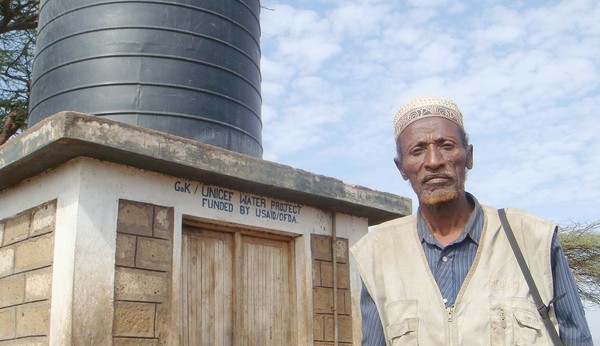
Tribes that lived side by side for decades say they've been pushed to warfare by competition for disappearing water and pasture. The government is accused of exacerbating tensions by taking sides and arming combatants who once used spears and arrows.

The aim, all sides say, is no longer just to steal land or cattle, but to drive the enemy away forever.

It's a combustible mix of forces that the United Nations estimates has resulted in at least 400 deaths in northern Kenya this year. Moreover, experts worry that it's just the beginning of a new era of climate-driven conflict in Africa.

And as noted previously, prolonged, intensified inter-ethnic clashes over dwindling resources could be turning into a pattern across Africa, even though climate change is largely understood to be a problem driven by high-income countries. More from the article:

Africa is no stranger to conflict: The continent has been rocked by war, ethnic hatred, post-colonial border disputes and competition for resources, including oil and diamonds. But as the deserts encroach in Sudan, rainfall declines in the Horn of Africa -- a 15% decrease is predicted over the next few decades -- and fresh water evaporates in the south, climate change is transforming conflicts and kicking old tensions into overdrive.

"Climate change amplifies and escalates vulnerability," said Achim Steiner, director of the U.N. Environment Program. "It doesn't mean that conflict is inevitable, but it's much more likely."


And finally, easy access to small arms exacerbates the problem. Not surprisingly, the United States produces the highest number of weapons in the world, a good portion of which make it into the black market (see HERE).

But conflict is perhaps the most alarming symptom. Violence is becoming deadlier thanks to population growth and the proliferation of arms. Thirty years ago, a few dozen tribal warriors with spears might have clashed at a water hole. Today rural communities are armed with AK-47s and even national armies are jumping into the fray.

[...]

Most climate-related conflicts in Africa have been localized, but experts warn that "climate wars" between neighboring countries could be on the horizon.

"If there will be any wars, they will probably be over water," said Odingo of the climate change panel.

It's globalization at its worst. The whole article is an important and engaging read; check it out.

Academics Blogs

(Photos via the L.A. Times)

Monday, September 28, 2009

Cumulative Effects of Globalization: The Philippines

Globalization occurs on many fronts. In our global society, there are related economic and militaristic arrangements, both of which benefit high-income imperialist countries more than they do those in the developing stage. Additionally, international economic and militaristic arrangements affect climate change and cultural interchange. Again, in this system, those countries that spread their systems profit disproportionately in the global matrix.

As has been noted across the news, Manila (capital city of the Philippines) and its greater metropolitan area has recently been struck by typhoon Ondoy, resulting in mass flooding and thus far,
141 deaths/37 missing. Unfortunately, the rippling effects of this disaster will be all the more devastating for the country. From a financial standpoint, early estimates show that the flooding will cost the Philippines colossal amounts in repair of infrastructure and insurance claims.

Perhaps worse, the flooding will have lasting effects in terms of hospital costs and impending disease, in particular for those families who live(d) in shanty town-type housing that is highly prevalent across Manila’s greater metropolitan area. Due to typhoon Ondoy, the number of internally displaced persons (IDPs) in the Philippines has likely increased in the hundreds of thousands, and undoubtedly, poorer families will be more susceptible to disease due to a lack of health insurance and generally poorer health.

Climate Change and Economic Imbalances

While it is impossible to know if typhoon Ondoy is a direct result of climate change or not,
IRIN reported in July of this year that the Philippines was one of the top 12 countries in the world at greatest risk of environmental disaster coming at the hands of climate change (specifically storms):

The World Bank has made a list of the five main threats arising from climate change: droughts, floods, storms, rising sea levels, and greater uncertainty in agriculture. Four of the world's poorest nations top the list of the 12 countries at the highest risk.

[…]

The Philippines, a middle-income country in Southeast Asia consisting of over 7,000 islands, leads the list of nations most in danger of facing frequent and more intense storms. In 2008 it was one of three countries hit by the most disasters, according to the Brussels-based Centre for Research on the Epidemiology of Disasters.

The above referenced report essentially called it here, noting further that climate change will affect the poorer countries of the world more so than those countries that are ultimately causing adverse environmental shifts.

The assumption that free trade and the development of industry in middle-income/developing countries benefits all of society relies on a capitalist ideology, which professes that accumulating more and more and more is a good thing. Incessant accumulation can best be accomplished by exploiting vulnerable populations, in particular those outside of one’s immediate locale; it is at this stage where the most money is made (lowering production costs).

However, once tangible products are available for sale, a second key for capitalists is to manufacture a cultural desire for those products that exceeds what the labor force can afford. Thus, the concept of credit becomes all the more important -- people from all socio-economic groups will defer to creditors to pay for material items now, but pay back creditors more later, or pay the eventual punitive consequences.

The real point here, however, is that high-income countries (e.g., Japan, United States, Germany) plant factories overseas to lower production costs, justified through the capitalist ideology that they are “helping” low-income countries industrialize, a so-called natural progression in society. But what if those countries do industrialize? Won’t they likewise want to then shift to a service/technology-based economy?

This means they will have to locate poorer countries where they can build factories and exploit new minority workers. It will be a never ending disastrous cycle of human and environmental exploitation … never ending that is, until there is no one and no place left to exploit. But that wouldn’t change the capitalist ideology; it would just mean new forms of exploitation must be created.

More to this end, the Philippines exemplifies a classic example of manufactured international dependence in our capitalist world. As I
blogged about previously, international industries rely heavily on Filipino/a contract laborers who remit enormous amounts of money back home annually. This system is applauded by some key governmental officials. But in reality, the system fosters dependence, a lack of internal motivation/innovation, and family breakup.

Militaristic Paternalism

Additionally, the United States maintains a system of militaristic governance in the Philippines, currently defended through the ideological fear of terrorism. A
history of colonial policies and practices has intensified the marginalization of Muslims in the Philippines’ southern region of Mindanao. Marginalization of course cultivates extremism (based on both religious fundamentalism and/or poverty). From a September 25, 2009 New York Times article:

Last month, after consulting with the Philippine government, the United States decided to extend the operation of its force in the southern Philippines, known as the Joint Special Operations Task Force-Philippines and composed of 600 elite counterinsurgency soldiers. The announcement drew angry responses from left-leaning politicians and news media; American officials declined to be interviewed for this article.

Since establishing the task force in 2002, the United States has provided the Philippines with $1.6 billion in military and economic aid. Much of that, including $400 million from the United States Agency for International Development, has been funneled into Mindanao in the southern Philippines, where Abu Sayyaf and another Muslim separatist group operate.

[…]

The Americans have also been directing development assistance here, including building roads, bridges and buildings; improving cellphone service and encouraging local businesses; training teachers and wiring schools for the Internet; and providing temporary medical and dental clinics.

However, the sentiments concerning U.S. military intervention and presence are not all positive, nor should they be based on America’s militaristic history in the Philippines. More from this same NY Times article:

“Peace here in Basilan is so elusive,” Mr. Furigay said, adding that poor governance created an environment in which groups like Abu Sayyaf grew. “Most of our leaders in Basilan are not really sincere. Most of them are holding their positions just to enrich themselves.” He said that because Abu Sayyaf’s leadership had been decimated, the group’s members were now motivated by “grievances.”

“There’s little ideology,” he said, estimating that Abu Sayyaf’s core members numbered fewer than 20 in Basilan.

That assessment was shared by other islanders, including those less welcoming of an American presence. Al-Rasheed M. Sakkalahul, Basilan’s vice governor, estimated that only 10 were longtime, ideologically driven members. But he said they were able to mobilize about 100 supporters in a conflict.

“All the rest are ordinary bandits, even civilians without any training on how to handle firearms,” Mr. Sakkalahul, 52, said at his office in Isabela. “They join Abu Sayyaf so they can divide ransom money from kidnapping victims.” He said that given those circumstances, he was skeptical of the American force’s presence here and complained that he had not been given facts about the mission. “You are my visitor in my house,” Mr. Sakkalahul said. “You just enter my house without even knocking on my door. What is your purpose in coming?”

Perhaps America’s real interest in maintaining military operations in the Philippines and other developing countries lays in a more clandestine industry that mixes private capital with international militaristic objectives. See below:


As can be seen, contemporary imperialism manifests in multiple forms, relying on governmental complicity/corruption from numerous countries, public fear, and capitalist ideology. The results of this complex web are likewise multiple, exhibited through economic dependence/exploitation, deference to external military operations, and an increased potential for natural disasters.


(Photo courtesy of Reuters).
Academics Blogs

Saturday, June 13, 2009

When you owe a country $1 trillion, they can pollute as they wish

The U.S. is not significantly pressuring China to reduce greenhouse gas emissions. What a shocker, pollute away. According to The Guardian, we are merely asking China to improve standards that would help to slow climate change, but not prove any real outcomes.

From The Guardian:

The US said today it would not demand that China commits to binding cuts in its greenhouse gas emissions, marking an important step towards agreement on a global treaty to fight climate change.

[…]

Jonathan Pershing, head of the US ­delegation in Bonn, said developing countries – seeking to grow their economies and alleviate poverty – would instead be asked to commit to other actions. These include increasing energy efficiency standards and improving the take-up of renewable energy, but would not deliver specific reductions.

We shouldn’t be too surprised since (1) the U.S. and China are the two biggest impact players that pollute the world, and (2) China can basically bully the U.S. around when it comes to international policies due to the colossal amount of money we’re indebted to them. Zachary Hubbard asked back in Feb 09, “Is America becoming a Chinese puppet state?” Apparently so.

Between 2001 and 2008, the U.S. increased its military expenditures by 112%. Last year, the U.S. spent $711 billion on the military. This amount comprised 48% of the entire world’s military spending. Gee, no wonder we’re so heavily in debt.

Out of control military spending, climate change, the national debt, inconsistent international relations…they’re all interconnected. And as for pollution and climate change, if
an increase in natural disasters and mass population shifts don't affect developed countries significantly in this generation (and that's a big "if"), I doubt if the next generation will be so lucky.

(Photo courtesy of The Guardian)

Academics Business Directory - BTS Local

Thursday, April 16, 2009

The Price Others Pay for Luxury: The Case of Dubai

I’m a bit late getting to this story, posted in The Independent by Johann Hari back on April 7, titled “The dark side of Dubai.” It’s long for an internet story, but it should be long. Hari provides an incredibly comprehensive overview of the numerous problems entrenched in the Middle East’s “Sin City” – gluttony, hideous forms of contract labor (essentially slavery), unmitigated environmental irresponsibility, racism, white collar crime…the list goes on.

As developing countries shift their industrial infrastructure, Dubai can be seen as the ultimate example of social recklessness.

Sahinal Monir, a slim 24-year-old from the deltas of Bangladesh. "To get you here, they tell you Dubai is heaven. Then you get here and realise it is hell," he says. Four years ago, an employment agent arrived in Sahinal's village in Southern Bangladesh. He told the men of the village that there was a place where they could earn 40,000 takka a month (£400) just for working nine-to-five on construction projects. It was a place where they would be given great accommodation, great food, and treated well. All they had to do was pay an up-front fee of 220,000 takka (£2,300) for the work visa – a fee they'd pay off in the first six months, easy. So Sahinal sold his family land, and took out a loan from the local lender, to head to this paradise.

What follows?

As soon as he arrived at Dubai airport, his passport was taken from him by his construction company. He has not seen it since. He was told brusquely that from now on he would be working 14-hour days in the desert heat – where western tourists are advised not to stay outside for even five minutes in summer, when it hits 55 degrees – for 500 dirhams a month (£90), less than a quarter of the wage he was promised. If you don't like it, the company told him, go home. "But how can I go home? You have my passport, and I have no money for the ticket," he said. "Well, then you'd better get to work," they replied.

The work is "the worst in the world," he says. "You have to carry 50kg bricks and blocks of cement in the worst heat imaginable ... This heat – it is like nothing else. You sweat so much you can't pee, not for days or weeks. It's like all the liquid comes out through your skin and you stink. You become dizzy and sick but you aren't allowed to stop, except for an hour in the afternoon. You know if you drop anything or slip, you could die. If you take time off sick, your wages are docked, and you are trapped here even longer."

Is he angry? He is quiet for a long time. "Here, nobody shows their anger. You can't. You get put in jail for a long time, then deported." Last year, some workers went on strike after they were not given their wages for four months. The Dubai police surrounded their camps with razor-wire and water-cannons and blasted them out and back to work.

Again, although the piece focuses heavily on this type of occupational exploitation, it covers a wide variety of other important issues. I could cut and paste more sections in here, but that would not do the story justice. If you have 15 minutes or so, check it out. It is a must read.

The only concern I had with the piece was an ethical one. It quotes individuals who, although their names may have been changed, could still be identified by the government. And as noted in the article, resistance to the capitalist project is met with extreme reprisals. I don’t suppose linking this article up on my little blog will add to that risk, but it is a risk to the confidential informants.

Last year, a good friend of mine suggested I apply for a faculty position in Dubai. At the time, I knew very little of area. Yikes.


(Photo courtesy of The Independent)


Academics Business Directory - BTS Local Subscribe with Bloglines

Wednesday, April 15, 2009

With Global Economic Crisis, Will Suicide Rates Spike in '09?

Emile Durkheim couldn't have called it much better.

As told in a video story in The Independent ("
Japan suicides rise with crisis"), completed and attempted suicides seem to be rising in Japan due to the global economic crisis. Actually, Japan has had elevated suicide rates relative to the rest of the world since WWII, but according to the story, in the 1990s when Japan was in economic recession, suicides rose 34%.

Seems they're rising again. Said one of the individuals profiled in the story:

In recent months, I've rescued 19 people. They were temporary workers that had lost their jobs, people so badly hit by the economic crisis that they had no other solution than to kill themselves. I've been patrolling here for five years now, and this year, I can only say the situation is serious.

Then I saw this today, also from The Independent ("
1,500 farmers commit mass suicide in India").

Over 1,500 farmers in an Indian state committed suicide after being driven to debt by crop failure, it was reported today.

It appears these suicides are coming off the heals of a combination of problems stimulated by greedy money lenders, governmental development, and likely climate change.

Bharatendu Prakash, from the Organic Farming Association of India, told the Press Association: "Farmers' suicides are increasing due to a vicious circle created by money lenders. They lure farmers to take money but when the crops fail, they are left with no option other than death."

Mr Prakash added that the government ought to take up the cause of the poor farmers just as they fight for a strong economy.

"Development should be for all. The government blames us for being against development. Forest area is depleting and dams are constructed without proper planning.

All this contributes to dipping water levels. Farmers should be taken into consideration when planning policies," he said.

There sure are lots of depressing examples for those sociology 101 courses.

Academics Business Directory - BTS Local Subscribe with Bloglines

Saturday, March 21, 2009

Capitalist System and Greed Exacerbate Global Stratification

The World Health Organization (WHO) has posted a moving speech made by their General-Director, Dr. Margaret Chan titled “The impact of global crises on health: money, weather and microbes.” The speech, given at 23rd Forum on Global Issues in Berlin, Germany focuses on the two central crises impacting our world today – the financial downturn and climate change.

More specifically, Dr. Chan’s speech bluntly illustrates that although high-income countries are ultimately at fault for both the depressed economy and climate change, they will hit developing countries the hardest. Still, unmitigated capitalism and its impact on climate change will be the demise for everyone if we do not change our means of living and values right now. From Dr. Chan's speech:

The contagion of our mistakes shows no mercy and makes no exceptions on the basis of fair play. Even countries that managed their economies well, did not purchase toxic assets, and did not take excessive financial risks will suffer the consequences. Likewise, the countries that have contributed least to greenhouse gas emissions will be the first and hardest hit by climate change.

The financial crisis and climate change are not the only markers of bad policies and failed systems of governance. The gaps in health outcomes, seen within and between countries, are greater now than at any time in recent history. The difference in life expectancy between the richest and poorest countries now exceeds 40 years. Globally, annual government expenditure on health varies from as little as US$ 20 per person to well over US$ 6000.

Dr. Chan’s words on free trade, capitalist venture and their incompatibility with promoting equal health are especially compelling.

If businesses, like the pharmaceutical industry, are driven by the need to make a profit, how can we expect them to invest in R&D for diseases of the poor, who have no purchasing power?

In far too many cases, economic growth has been pursued, with single-minded purpose, as the be-all, end-all, cure-for-all. Economic growth, as many believed, would cure poverty and improve health. This did not happen.

In short, for us to somehow think capitalism run amok would promote health across the globe is ludicrous. Capitalism’s foundation is based on employers trying to get as much out of natural resources and employees as possible for the lowest costs, and then selling products at a premium. This formula is antithetical to promoting equality of any kind. And putting the global economic crisis in perspective, Dr. Chan makes the following statement: “In affluent countries, people are losing their jobs, their homes, and their savings, and this is tragic. In developing countries, people will lose their lives.”

Because our society values financial wealth as the key indicator of success, we fail to place adequate value on helping others. In the end, a globalized capitalist economy with virtually no regulation exacerbates health disparities and has even come back to haunt the power elite.

The policies governing the international systems that link us all so closely together need to look beyond financial gains, benefits for trade, and economic growth for its own sake. They need to be put to the true test.

What impact do they have on poverty, misery, ill health, and premature death? Do they contribute to greater fairness in the distribution of the benefits of socioeconomic progress? Or are they leaving this world more and more out of balance, especially in matters of health?

I would argue that equitable access to health care, and greater equity in health outcomes are fundamental to a well-functioning economy. I would further argue that equitable health outcomes should be the principal measure of how we, as a civilized society, are making progress.

This world will not become a fair place for health all by itself. Economic decisions within a country will not automatically protect the poor or guarantee universal access to basic health care.

Globalization will not self-regulate in ways that favour fair distribution of benefits. Corporations will not automatically look after social concerns as well as profits. International trade agreements will not, by themselves, guarantee food security, or job security, or health security, or access to affordable medicines.

All of these outcomes require deliberate policy decisions.

Turning to global climate change, Dr. Chan’s comments are equally poignant, though disturbingly so. As I’ve noted before, climate change will influence high- and low-income countries alike with increasing frequency and intensity in the coming years. Dr. Chan notes that major outbreaks, such as SARS will not only be more common, but will be handled with less efficiency and effectiveness if less resources are put into health systems due to the economic crisis.

Several consequences for health have been identified with a high degree of certainty. Malnutrition will increase, as will the number of deaths from diarrhoeal disease. More storms and floods will cause more deaths and injuries, and cholera outbreaks will occur with greater frequency.

Heat waves, particularly in large cities, will cause more deaths, largely among the elderly. Finally, climate change could alter the geographical distribution of disease vectors, including the insects that spread malaria and dengue.

All of these health problems are already huge, largely concentrated in the developing world, and difficult to control.

Although climate change is, by its nature, a global phenomenon, its consequences will not be evenly distributed. Scientists agree that developing countries will be the first and hardest hit.

According to the latest projections, Africa will be severely affected as early as 2020. A decade from now, crop yields in some parts of Africa are expected to drop by 50%. By 2020, water stress could affect as many as 250 million Africans.

Imagine the impact on food security and malnutrition. Imagine the impact on food aid. In many African countries, agriculture is the principal economic activity for 70% of the population. Among Africa’s poor, 90% depend on agriculture for their livelihoods. There is no surplus. There is no coping capacity. There is no cushion to absorb the shocks.

So what’s the bottom line? This statement sums it up quite nicely.

Up to now, the polar bear has been the poster child for climate change. We need to use every politically correct and scientifically sound trick in the book to convince the world that humanity really is the most important species endangered by climate change.

(Photo courtesy of the World Health Organization)

Academics Business Directory - BTS Local Subscribe with Bloglines

Saturday, March 14, 2009

Global Warming, Mass Migration, and US

NPR had a good discussion up this past Thursday (3/12/09) about climate change and its effects on humanity. Their basic premise was that although most people see climate change affecting rain forests, glaciers, polar bears and so forth, they fail to see global warming's direct impact on people.

Their guests had some excellent things to say from first hand experience. Christina Chan of CARE USA:

I don't think that climate change has been an underlying cause of the poverty and injustice we've seen in the past. Poorer communities have dealt with drought, floods, cyclones, hurricanes for generations. The difference now is in terms of the frequency, intensity, and severity. There will be more.

A drought or a flood might hit a community and hit the poorest of the poor in that community, maybe every seven years. What we see happening now is an increase in the intensity, frequency, and so there's less time to recover. And so if it's happening every year or every other year, a drought in one year, a flood in another, families, especially families with very little assets can't recover as quickly. The resilience is lower. So what we're seeing is the challenges we've been facing for say the last 60 years are going to be that much more complex and difficult with climate change.

Cynthia Awuor of CARE Internationa added her perspective, describing some of the tangible effects of climate change now manifesting in developing countries, in this case, Kenya:

With increased droughts, food production is being affected negatively, so there's repeated crop failures. And even at the moment as I speak drought has been occurring in Kenya and we have famine. We are experiencing famine at the moment that's affecting about 10 million people out of a population of about 38 million.

And the women that we work with in some of the regions are saying that they're feeling that the temperatures are becoming higher, so it's become hotter, and it becomes taxing on their bodies when they have to walk long distances to actually look for water because sometimes the search for water takes up to six hours a day.

Chan went on to add that those in high-income countries need to care and push their policy makers to address the issue:

What people here in the United States can do, I think it is important to watch as individuals our own carbon footprint. But I think it's really important as citizens of the United States to really put pressure on our policy makers cause they're not hearing it. Especially these days with the economic situation, my fear is that climate change will be put on the back burner.

It's a good 7 minute discussion definitely worth listening to HERE.

I did think, however, that while the typical NPR listener might be interested in the piece, a majority of the public wouldn't give a rip since the piece indirectly intimated that global warming wasn't having any significant impact on them. In short, nothing in the piece suggested global warming would affect people in the U.S.

The thing is, even popular media has occasionally reported the long-term effects global warming will have on mass migration, as those in the most affected areas are forced to leave their homelands. Looking ahead to 2050, a Reuters article notes:

The daunting prospect of mass population movements set off by climate change and environmental disasters poses an imminent new challenge that no one has yet figured out how to meet.

People displaced by global warming ... could dwarf the nearly 10 million refugees and almost 25 million internally displaced people already fleeing wars and oppression.

And not surprisingly, should mass migration inflate to unprecedented levels, in all likelihood xenophobic reactions will inflate accordingly.

Refugees may also feel the world has less room for them as they try to cross borders into countries where hostility to migrants of all sorts has grown, compared with the Cold War era when fugitives from communism won sympathy and asylum.

Of course this is not to suggest that we should get people to care about the earth by scaring them with the potential influx of immigration and refugees. However, we do need to wake up and realize that global warming will
directly affect those in high-income countries as resources inevitably shrink.

But that's 2050, a good forty years away. Maybe our kids or grand kids will have to worry about it, but not us. In the spirit of typical American individualism, it's a "them" problem for them to figure out. Not so according to the Global Trends 2025: A Transformed World report, published by the U.S. National Intelligence Council.

The report itself is quite lengthy, a good 100+ pages. However, it has important sections focusing on climate change and its varied ramifications. In Chapter 4, titled "Scarcity in the Midst of Penty?", the authors write of global warming's global impact:

Most displaced persons traditionally relocate within their home countries, but in the future many are likely to find their home countries have diminishing capabilities to accommodate them. Thus the number of migrants seeking to move from disadvantaged into relatively privileged countries is likely to increase. The largest inflows will mirror many current migratory patterns—from North Africa and Western Asia into Europe, Latin America into the US, and Southeast Asia into Australia. (p. 53).

And again, we're talking 2025, a mere 16 years from now. If our current global economic crisis is a problem, think about the sheer number of people who simply will not be able to live at a subsistence level, how that number will explode, and how it will increase mass dependence and competition. Furthermore, the report explicitly states that climate change can and often does stimulate war.

Climate change is unlikely to trigger interstate war, but it could lead to increasingly heated interstate recriminations and possibly to low-level armed conflicts. With water becoming more scarce in several regions, cooperation over changing water resources is likely to be increasingly difficult within and between states, straining regional relations. (p. 66).

Recall what served as the catalyst for ethnic genocide in the Sudanese region of Darfur back in 2003. While fundamental ethnic differences set the stage for divided groups who would soon be in major conflict, it was a loss of crops due to climate changes that sparked the conflict.

Either we get a handle on global warming now, or we see Darfur more frequently, with greater intensity, and closer to home before we know it.

(Photo courtesy of Reuters)

Academics Business Directory - BTS Local Subscribe with Bloglines