Back in 1898, the United States declared war on Spain. In defeating the Spaniards, America expanded its empire by acquiring Puerto Rico, Guam, and the Philippines -- one of many examples in the global battle between western powers who used smaller, less powerful, and previously sovereign countries in the quest to control more natural resources and labor.
Among the numerous historical interpretations of western colonialism is also the cultural focus on manhood as it relates to war and more broadly, combat. In the aftermath of America's Civil War, American masculinity was reasserted through the likes of Theodore Roosevelt and his Rough Riders, fighting in, among other areas, San Juan Heights. Following successful military campaigns, Roosevelt would frequently spout verbal connections between politics, militaristic might, and a manhood that were said to cut across American class and regional lines.
It might be a stretch to say the vestiges of western colonialism are seen in today's sporting world. Still, it's worth noting -- as has been expressed countless times by sports theorists -- how present-day athletes so frequently represent minority populations previously wrung through western colonialism.
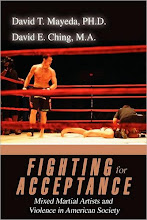
Yesterday (11.14.09), pound-for-pound boxing king Manny Pacquiao (Philippines) brutalized Miguel Cotto (Puerto Rico) over the course of 12 rounds. From all accounts, Cotto's victimization was particularly vicious after round 4, to the degree that Cotto's father wanted the fight stopped early, according to ESPN's SportsCenter.
Instead, the fight essentially went the distance until the referee intervened in the 12th, giving Pacquiao the technical knockout victory, and a place in boxing history as the only individual to win titles in 7 different weight classes.
As seen through the plethora of retired boxers out there who struggle with Parkinson's and other forms of "punch drunk" head trauma, this seems to me ultimately a space where a few minorities are allowed to flourish and reap massive financial rewards in an ultimately destructive practice, termed by Loic Waquant, "flesh peddling." Sure, these icons galvanize countries and diasporic communities.
But community and nationalistic pride notwithstanding, does it not seem odd that icons who represent minority communities are essentially pitted against one another, and paid to strike each other in the head, by those who benefit within the American capitalist milieu (some of whom are ethnic minorities themselves)? Before Cotto, Pacquiao's nemeses were predominantly from Mexico, generating a series of sporting wars between brown people outside of the privileged west.
And it looks like next up for Pacman is Floyd "Money" Mayweather, a flamboyant, undefeated African American boxer. As Pacquaio's success continues, he makes the rounds, whipping up on Mexicans, Irish, Puerto Ricans, etc.; we'll see what happens with Mayweather should the fight happen.
All the while, the masses carry on, cheering as their male heroes launch padded fists into each other's heads. Granted, their heroes pull in millions for themselves, small portions of which are occasionally donated to charities. In the mean time, the dearth of critical analysis continues, which might otherwise ask why we celebrate and reward minorities who enact new wars, sporting wars, upon each other over the weekend.
And what do minorities do after cheering on or sulking away from the sporting outcome? Do oppositional fighters coalesce different minority communities to question the shared experience of global inequity? Or is it back to work on Monday...
In this example, athletics provides at least a reprieve where women can bond with one another physically and emotionally through rugby. On the field, they appear free from the ubiquitous presence of patriarchy. To some degree, and I would say it is a significant one at the small group level, there is an expression of empowerment and a real venue through which these women assert a feminist agenda. Unfortunately, this agenda can only be pushed through sport so far.
Sport almost never changes the overall dimensions of societal patriarchy. And truthfully, it cannot, because even in an athletic space that excludes males, sport still follows the male model that pits opponents against one another, especially as the stakes increase with opponents vying for physical, economic, and emotional superiority.
More often than not, gaining power through sport eventually means falling into a patriarchal model where individual women rise in privilege economically while reproducing the broader patriarchal forces that collectively oppress women (e.g., emphasizing femininity via a sexual allure), what Pierre Bourdieu termed, "symbolic violence."
In this example, there are clear vestiges of patriarchy, seen visually through the hijab. However, I would argue the hijab, while perhaps the most visible example of ongoing patriarchy, is not the most significant example. Instead, what we see here is a space where women are allowed to escape temporarily from the confines of masculinity through rugby without changing anything outside of sport at all.
Thus, unless rugby serves as a true catalyst that sparks social change beyond sport, it will ultimately maintain the status quo. Women get a release while tackling one another, and go back to more of the same once off the field. In short, sport can function in the same way for women that religion does for minorities -- as the "opium for the masses."
Granted, as is noted in the video, this league has only been in existence for one year -- an extremely short period -- so perhaps over time, I will be proven wrong. Maybe rugby will spark something in these and other Iranian women off the field. In fact, sports have been used historically to advance some social movements:
However, athletics' power, as demonstrated in the United States through race, was driven largely by a broader Civil Rights Movement. Further, there were clear moments during that movement, that actively excluded female athletes (e.g., the protests during the 1968 Olympic Games in Mexico City).
This is not to dismiss the initiative, courage, or athletic abilities of any female athletes who have pushed a feminist agenda, whether that be the women presented in the above YouTube video or female athletic leaders from Western contexts.
Instead, this is to point out that athletics under their current model do not truly offer women an opportunity to change broad gender inequities. Thus, as much as I would support this Iranian women's rugby league and other sporting endeavors for minority women, I would caution sports' effectiveness in stimulating extensive social change.
Simon Creek has an insightful article up dissecting this year's Southeast Asian Games: "Little Laos awaits its big moment." From a symbolic interaction standpoint, the article exemplifies how this and other international sporting events serve as proclaimed evidence that the host country is prepared to make its mark in the international economy.
This is not just a sports event, but probably the biggest state extravaganza in the country's history since the Lao People's Democratic Republic [LPRP] gained independence from France in July 1949.
[...]
Despite the difference in scale, there are parallels to the Summer Olympic Games held in China last year. Just as Beijing leveraged the event to proclaim China's emergence as a global power, the games in Vientiane represent a regional coming-out for the Lao one-party state, a symbolic culmination of the over three decade-long "revolutionary struggle" for independence and development under the LPRP.
Perhaps more importantly, the piece also details how other Southeast Asian and East Asian countries have used these Games as an avenue to expand their industrial base across borders. With Laos unable to finance the Games themselves, it appears more powerful countries have taken advantage of Laos's underprivileged position in the region. This in effect allows countries like China to broker their way onto Laotian soil.
Most symbolically, perhaps, Laos is able to host the games only through massive assistance from its larger, richer allies in the region. The Chinese Development Bank has provided financing for the US$100 million main stadium complex, which is being built by Chinese contractors on the outskirts of the capital, Vientiane.
A Vietnamese company has built the $19 million athletes' village and Thai funds have been used to refurbish the existing National Stadium. Dozens of smaller financial agreements with countries like Japan and South Korea will provide everything from training to tracksuits.
There are good reasons for these countries to contribute their patronage. First is the simple commercial benefit. In return for building the stadium, Chinese developers were reportedly granted 1,640 hectares of prime land near the That Luangstupa, the national symbol, on which to develop a "Chinatown" complex in Vientiane. The Vietnamese company that funded the athletes' village is opening a wood-processing factory and hotel in Laos.
Second is regional influence. Thailand, Vietnam and China have long competed for influence in Laos. While socialist Vietnam has held political sway since the 1975 revolution, China has aggressively expanded its economic presence and soft power in the region, and some in the government, notably the Chinese-educated Somsavat, have increasingly turned to the regional giant.
One can see here the strategies more powerful countries use when hoping to nudge transnational business onto less powerful countries' land. The symbolic power of the sporting event is used by higher-income countries to spread their economic infrastructure across borders (note the link between symbolic interaction and conflict theory).
Once this year's Southeast Asian Games and all the hoopla are over, one has to wonder how Chinese, Thai, South Korean, and Japanese economic expansion into Laos will affect the Laotian people. History suggests, not so well.
I saw these photo opp's at a San Francisco mall about a year a half ago. Finally found the pictures. I remember thinking, "Bebe Sport? Are they promoting healthy athletics ... or smut?"
How are high heels and that bag (probably ridiculously over-priced) in any way related to sport? And why the hell does a supposed athlete have a whistle in his mouth ... and why is the other supposed athlete asleep on the woman's knee? Too many questions...
Sports have been used as a tool of assimilation by western powers for centuries. The following stories show vastly differnt approaches to the way that baseball is being diffused across the global landscape.
Let's just say there is little more to this story than the combination of reality television and capitalist greed, an opportunistic mix of popular culture and the pursuit of...Major League Baseball dollars. According to the story, sports agent, J. B. Bernstein co-founded a company that then started a reality TV show called the "Million Dollar Arm," set in India. Participants competed to win $1 million based on who could hurl the fasted baseball pitch and then throw three pitches of at least 90 miles per hour.
Two javelin throwers came out on top and have since been awarded contracts with a Pittsburgh Pirates minor league team. From the story's transcript:
MARTIN (interviewer): So J.B., let's start with you. What gave you the idea to travel halfway around the world from here to look for baseball players in India? It's not like there's a shortage of players on this hemisphere.
Mr. BERNSTEIN (interviewee): No, definitely not. I think in looking at India, I'm looking at the fact, you know, they have over 300 million men under the age of 25 and 100 percent of them pretty much play cricket in some form. So they're used to throwing a baseball-sized object. And because there is not a big pro sports scene in India, it just seemed that there had to be a lot of natural athletes out there.
The question was, does the age-old saying everybody says you can't teach speed - If I can have a guy who throws hard, I'll teach him everything else - well, that's the one thing we put to the test with, you know, one of the top coaches and it seems to have worked out.
[...]
MARTIN: So you're looking for basically, you're looking for the Yao Ming of India. You can find a new talent pool, but you figure you can also build an audience for baseball in India?
Mr. BERNSTEIN: Definitely. Yes, through following these guys, I think, you know, that's a great model, the Yao Ming-NBA model, and yeah, if we can create that artificially in India with baseball, I think we could see a similar type of...
MARTIN: So there was no romance in this for you. There was no - this was just a business thing?...No disrespect, but it wasn't like you were, like, oh, you know, the romance of the American pastime.
Mr. BERNSTEIN: No, well, I am a baseball fan more than anything. So yeah, I mean, there's certainly, I think, always a personal element to me with baseball. But yeah, I mean, there's no doubt this was a business decision that, by the way, everybody thought was stupid.
This is a classic example of hybridity where transnational capital (prize money, television production, and the actual players) moves back and forth between the United States and India. In the process, various forms of cultural interchange and cultural production are bound to emerge across multiple borders.
Of course in this story, we get the American perspective since the interviewer is American (African American), the first interviewee (notably the one I quote) is the American sports agent, and two additional interviewees are the Indian athletes (initially javelin throwers, turned minor league pitchers). Still, as pointed out by Michel Martin, one can't help but notice the capitalist desires expressed in this global exchange -- an American capitalist aims to find the next "Indian Yao Ming" superstar that will generate big bucks via the massive populace (i.e., potential audience/consumers) that is India. Capitalized multiculturalism at its finest.
Then we have a much different story of baseball and assimilation in Cambodia...
Cambodia is an unlikely place for baseball. There is severe poverty, lingering post-war trauma, and rampant human trafficking. Children are more likely to work or rummage through the fetid muck of the Steung Meanchey dump than go to school or play.
But for the past seven years, Joe Cook, a Cambodian refugee, has been teaching the game in his homeland, building Cambodia's first ball field. Last year, he even managed to put together a national team. In March, they finally won their first game, playing a short series against a team from Vietnam. Considering the violent history the two countries share, just playing the game was an accomplishment beyond any scorecard.
The story details how Cook (previously Jouret Puk) lost family to the Khmer Rouge, escaped Pol Pot's regime with his remaining family, lived by eating crickets, frogs, and tree bark, before making it to refugee camps in Thailand, the Philippines, and eventually ending up in Chattanooga, Tennessee, where he learned to play baseball. It is a fascinating story of human suffering and resiliency.
The story also sneaks in an abrupt, jolting example of how common and casual human trafficking is in present-day Cambodia.
In 2002, Cook's older sister Chamty, who he thought had perished, called from Cambodia. After years of brutality in the labor camps, she had been released in 1990 and used the Internet to track down members of her family. Cook agreed to reunite with her in Cambodia.
As a way of honoring him, Chamty wanted to travel to the airport to meet him. But the transportation costs were more than she could afford. She made a difficult decision. So as not to lose her brother again, she sold her son to traffickers.
"When I arrived and found out, I was devastated," Cook says, choking up, "She didn't understand that I could've met her anywhere. I never would've wanted her to do that." The first thing he did was buy back his nephew, Chea Theara, for $86.
From there, the author (John Perra) delves into Cook's efforts to build and sustain baseball in Cambodia. Unfortunately, we do not get further information on the unique ways that American baseball is modified to work in Cambodian culture (see here for baseball's cultural reproduction in additional cultural contexts).
However, we see that the globalization of baseball is not limited to greedy capitalist ventures (though those pursuits may dominate its international diffusion). In this case, baseball's introduction to Cambodia can be traced to genocide, refugee camps, international migration, and online networking. Stuart Hall might suggest the "feel good" nature of this multicultural story may influence readers to forget the significance of the killing fields and ongoing human trafficking.
It may seem odd to be writing a review of a documentary released back in 1994, which covers a team from 1990. However, I've found that PBS Frontline's documentary, In the Game, is still one of the best teaching tools out there that exemplifies how gender inequality manifests in society. At the same time, this documentary is an uplifting, positive story that will not leave students hanging their heads, depressed upon walking out of class.
The documentary follows Stanford's 1990 women's basketball team in their pursuit for an NCAA Division I National Championship. Their head coach, Tara VanDerveer has assembled an all-star group of athletes, many of whom are now seniors, including Jennifer Azzi, the documentary's central figure.
Throughout the course of In the Game, the documentary presents excellent examples of gender socialization, perceived deviance, limits to upward mobility, pay inequities, and of course it shows the benefits of Title IX. Last week I showed this documentary to my Intro to Sociology class, and despite the fact that In the Game's story is nearly 20 years old, it was still extremely well received by the students.
A male athlete in the class stated that he was engaged by it because he felt connected to the players and wanted to see if they would achieve their season's goal. A number of female students who played sports in high school but not college said they could identify with the players who were challenging gender role expectations as they pursued their athletic goals.
A non-traditional female student who had never played sports said she identified with the story since she grew up in the Title IX era and currently feels the same forms of resistance in the military that the female athletes/coaches described. A male student (not an athlete) commented that the story was inspiring and showed how much harder women had to work in order to receive equal treatment from the fans and athletic department.
Additionally, I feel the documentary illustrates the benefits people can gain through sports -- learning about teamwork, building confidence in multiple areas of life, learning how to bounce back from failures/disappointments, taking direction and constructive criticism, gaining discipline, etc. If girls are steered away from sports, then they are steered away from a major social institution in society that if run properly, can be extremely helpful in life.
Finally, indirectly, In the Game shows the benefits of affirmative action, which is exactly what Title IX is -- a government mandated intervention that calls for educational institutions to make serious progress towards gender equity in all facets of education; it seeks (at least in theory) to do away with educational gender discrimination by leveling out opportunity in law schools, med schools, athletics, and so on. In turn, it significantly alters society's cultural attitudes toward's women/girls in sports.
The only tidbit I feel the documentary missed was when it discussed briefly how women's collegiate basketball was outlawed in the early 1900s in order to "protect" women's health; the narrator should have stated specifically that "protecting women's health" meant making sure they did not damage their reproductive organs, showcasing how women were valued as mothers and confined to the domestic sphere. The documentary also illustrates "co-option," or women essentially entering a male-oriented sphere in greater numbers without truly changing the system.
Unfortunately, the documentary can no longer be ordered through FRONTLINE (the copyright has expired), but try locating the VHS copy in your school library. I cannot say enough good things about In the Game. And here's where the "protagonist," Jennifer Azzi ended up. You go girl!
This YouTube piece up on Al Jazerra makes for an interesting example, illustrating how women's oppression cuts across multiple layers in society and manifests from one stage in a conflict to the next.
To begin with, the war between Hamas and Israel was led on both sides by men. Thus, most (though not all) of the war casualties were male. The over-representation of male victims in homicides and via war is nothing new; nor is it unique to any part of the world. And for some, this may suggest a lack of male privilege. However, the fact remains that it is men who are making the systemic decisions to engage in war.
With a disproportionate number of men killed in war via combat and civilian attack, a disproportionate number of women are left widows. In this example, we can see the after-effects of how women and their families are impacted since they have been steered away from formal education and other forms of occupational training. They are forced to venture into a male-dominated culture with a limited occupational skill set and minimal social network.
And this is to say nothing of women/girls who are victims of sexual violence when used as a weapon of war...
 Back in 1898, the United States declared war on Spain. In defeating the Spaniards, America expanded its empire by acquiring Puerto Rico, Guam, and the Philippines -- one of many examples in the global battle between western powers who used smaller, less powerful, and previously sovereign countries in the quest to control more natural resources and labor.
 Instead, the fight essentially went the distance until the referee intervened in the 12th, giving Pacquiao the technical knockout victory, and a place in boxing history as the only individual to win titles in 7 different weight classes.
 But community and nationalistic pride notwithstanding, does it not seem odd that icons who represent minority communities are essentially pitted against one another, and paid to strike each other in the head, by those who benefit within the American capitalist milieu (some of whom are ethnic minorities themselves)? Before Cotto, Pacquiao's nemeses were predominantly from Mexico, generating a series of sporting wars between brown people outside of the privileged west.
 All the while, the masses carry on, cheering as their male heroes launch padded fists into each other's heads. Granted, their heroes pull in millions for themselves, small portions of which are occasionally donated to charities. In the mean time, the dearth of critical analysis continues, which might otherwise ask why we celebrate and reward minorities who enact new wars, sporting wars, upon each other over the weekend.


 Posts
Posts